News
Somerset Solders Ltd is now JOSCAR Registered
Published: 6th July 2026
JOSCAR is the supplier due diligence register for the UK aerospace, defence and security sectors, administered by Hellios and used by the major buying organisations across the industry.
Registration means our capability, compliance, quality systems and financial standing have been independently assessed and verified, and that information is now available to every participating buyer from a single trusted source.
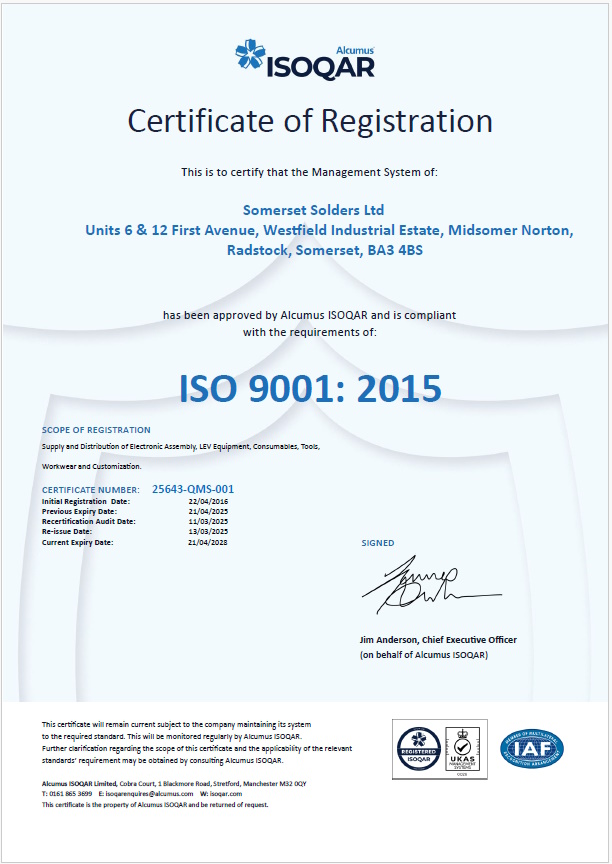
For our customers in electronics manufacturing, engineering, aerospace, marine and defence, this sits alongside our ISO 9001:2015 certification as further evidence of how we run the business. It applies across both of our brands: www.somersetsolders.com (supplying soldering equipment, consumables, ESD products, fume extraction and calibration services), and www.somersetworkwear.com (supplying technical workwear, ESD garments, PPE and branded uniforms).
If your organisation uses JOSCAR for supplier assurance, you can now find us on the register (membership number 10040660), pre-qualified and ready to support your projects.
We have supplied UK manufacturing for decades, and we back that experience with the evidence buyers need. JOSCAR registration puts it all in one place.
Somerset Workwear named as official distributors of Makita Workwear
Published: 20th April 2026
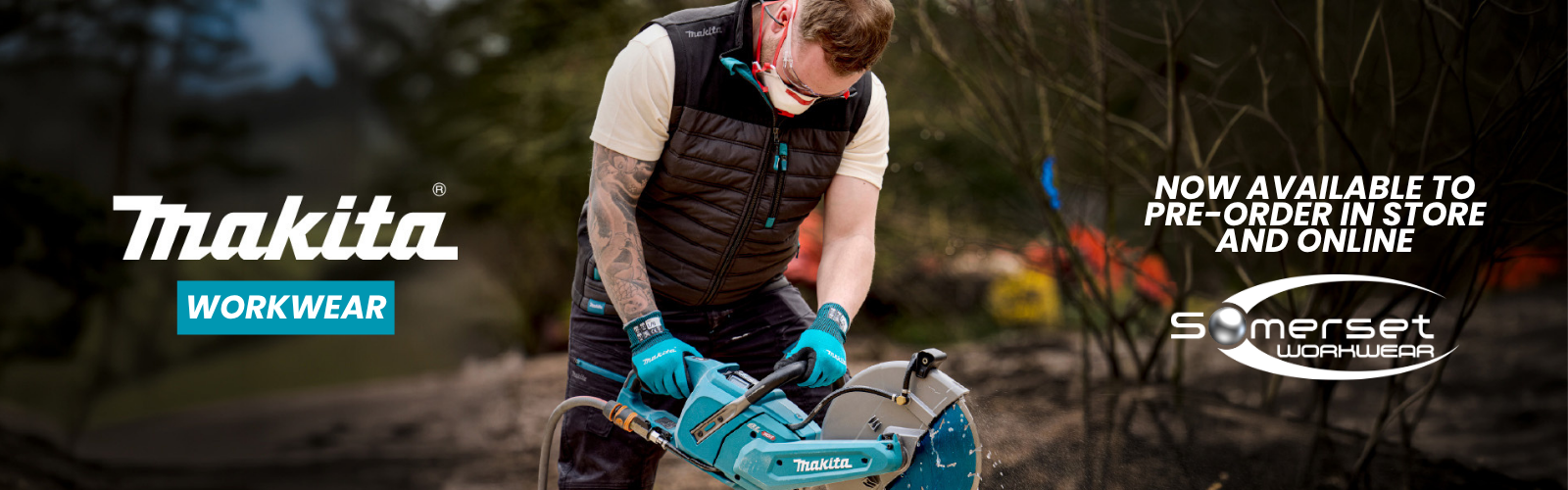
A partnership built on quality
For many years, Somerset Workwear has focused on one thing: supplying the trade with workwear and safety footwear that actually performs. We've built long-standing partnerships with brands that share our values, and being selected by Castle Clothing as an official Makita Workwear distributor is a genuine mark of that trust.
Duncan Glendinning, Sales & Operations Manager at Somerset Workwear, said: "We are delighted to have been named by Castle Clothing as one of the official distributors for the Makita Workwear range. It represents a significant and exciting addition to our quality trade workwear and safety footwear offering, a range we believe will resonate strongly with our customers."
Kevin Selwood, Sales Director at Castle Clothing: “We’re delighted to have Somerset Workwear as a valued stockist and partner. Their commitment to quality and service aligns perfectly with our own values, and we’re especially pleased to see them take on our new Makita Workwear collection. We’re confident it will be a great success for both of us and look forward to continuing to grow our relationship together.”
About the Makita Workwear range
Developed in partnership with Castle Clothing, a company with over 50 years of workwear manufacturing expertise, the Makita Workwear range is a premium, head-to-toe collection engineered for those who expect more from their kit.
The range includes:
- T-shirts and polos (BCI cotton and recycled polyester options)
- Hoodies for men and women
- Insulated bodywarmers and jackets
- Waterproof over-jacket
- Stretch trousers, joggers and shorts
- Thermal baselayer tops and bottoms
- S7S-certified waterproof safety boots in three colourways
- Safety trainers for men and women
- Accessories: socks, bobble hat, baseball cap, trucker cap
Every garment is engineered for durability, comfort and sustainability — featuring recycled fibres, Sustainable BCI cotton, PFC-free water-repellent finishes, CORDURA® reinforcements and YKK® zips throughout.
Add your brand with our in-house personalisation service
One of the things that sets Somerset Workwear apart is our in-house personalisation capability. Whether you're kitting out a team of two or a workforce of two hundred, we can add your company logo or branding to the Makita Workwear range through embroidery or vinyl printing, giving your crew a sharp, consistent and professional look on site.
It is a service we're proud to offer directly, without the need to go elsewhere. Just ask us when you visit the trade counter or get in touch via the website.
Come and see it in person
Another real advantage of choosing Somerset Workwear as your workwear provision partner is the ability to visit our trade counter and see the range for yourself. Workwear is personal: fit, feel and fabric all matter. We want you to be completely confident in what you're buying. Our team is on hand to help you find the right items for your trade and working conditions.
Of course, if you'd prefer to order from the comfort of your van or office, our website makes it easy, with next day dispatch on all stocked items.
Click here to view the collection > Makita Workwear
ESD vs Antistatic: Choosing the Right Garments for Your Workplace
Published: 12th September 2025

1. What Does Antistatic Mean?
- They work by reducing the risk of static charges accumulating on fabrics or surfaces.
- They do not actively discharge electricity to ground — instead, they stop static from building in the first place.
Typical uses include:
- Plastics manufacturing
- Optical frame production
- Packaging facilities
- Dust-sensitive or flammable environments
2. What Does ESD Mean?
- They are part of a wider control system that requires grounding, monitoring, and regular testing
- They comply with IEC/EN 61340 standards
- They are often marked with the distinctive ESD protective symbol
- They have a finite lifespan of around 12–18 months before their protective qualities diminish and replacement is necessary
Typical uses include:
- Electronics manufacturing and assembly
- Semiconductor production
- Medical device manufacturing
- Aerospace and defence industries
3. Antistatic vs ESD: What’s the Difference?
| FEATURE | ANTISTATIC GARMENTS | ESD GARMENTS |
| Function | Prevent static build-up | Dissipate static charges safely to ground |
| Applications | Plastics, optics, packaging, dust-sensitive environments | Electronics, semiconductors, medical devices |
| Grounding Required | No | Yes – must connect to a grounding system |
| Testing & Compliance | Not required | Regular testing and calibration required |
| Lifespan | Longer lasting (general wear-and-tear applies) | 12–18 months before replacement |
| Cost | Lower | Higher (but essential for certain industries) |
4. When Do You Need Antistatic, ESD, or Both?
Antistatic Only
- Examples: plastics production, optical frames (no electronic elements), packaging, flammable or dusty environments.
ESD Only
- Examples: assembling circuit boards, working with semiconductors, handling precision medical devices.
Here, Antistatic protection alone is not sufficient.
ESD and Antistatic Together
- Example: a medical device assembly that combines plastic components with electronic modules.
In these environments, operators need full ESD garments while also considering Antistatic shoes, gloves, and other PPE to cover every aspect of static control.
5. Common Misconceptions
“ESD is always better.”
“We only need the garments.”
- Proper grounding systems
- Testing and monitoring equipment
- Staff training
- Replacement strategies
Without these, the garments alone won’t provide effective protection.
6. A Real-World Example
- Higher upfront costs
- The need for grounding systems and compliance monitoring
- Regular garment replacement (12–18 months)
7. Practical Considerations Before Choosing ESD Garments
- Do you handle sensitive electronic components?
- Do you have a grounding strategy in place?
- Are you prepared for garment testing and monitoring?
- Do you have a replacement plan for garments every 12–18 months?
8. Supporting Compliance: Testing and Calibration
- Monitor compliance
- Extend garment life through proper care
- Replace garments at the right intervals
- Train staff on correct use
9. How to Choose the Right Garment for Your Industry
10. Conclusion
- Antistatic: Prevents static build-up, suited to non-electronic environments.
- ESD: Dissipates charges safely, required for electronics and sensitive devices.
- Both: Sometimes needed in hybrid environments.
Is your ESD garment compliant?
Published: 25th July 2023
In this article, I will explain the importance of periodic testing of your ESD workwear to ensure that the garment is staying within the compliance parameters and in accordance with IEC 61340-4-9:2016 and ANSI/ESD STM2.1:2018
What’s so special about ESD clothing fabrics?
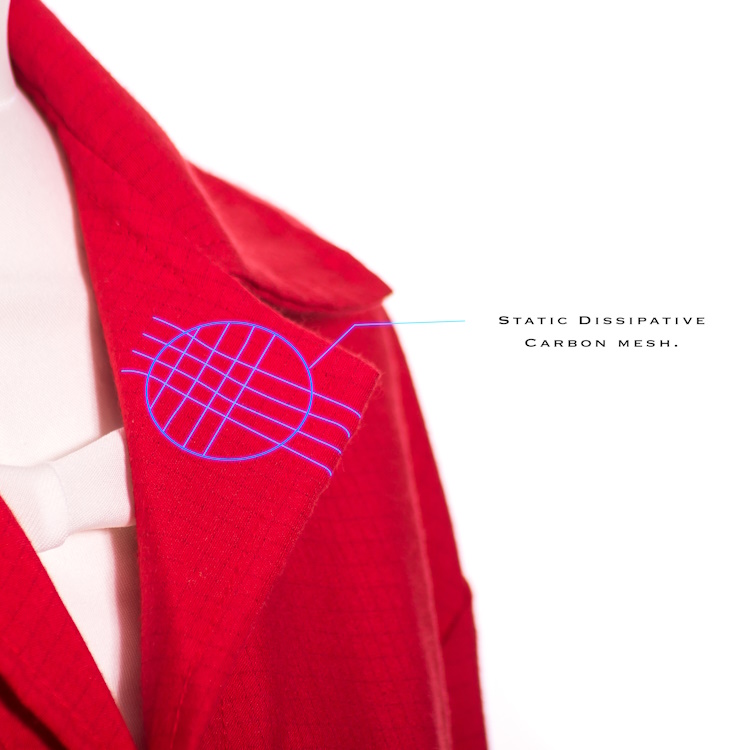
What makes an ESD garment different than a standard warehouse lab coat or polo shirt for example, is that within the material is a conductive fibre comprising of a carbon-infused monofilament incorporated as a grid of typically 4mm to 5mm. With lighter ESD materials this can be seen. The ESD garment manufacturer will also quote the percentage of carbon in the material; typically, we will not stock a garment of less than 2% conductive carbon content. As an article of clothing consists of different panels i.e. the main body section, arms, and cuffs, the manufacturer needs to ensure that these fabric panels are correctly stitched to ensure conductive continuity runs through the finished item. A conductive thread is used for this purpose.
The cleaning of ESD clothing
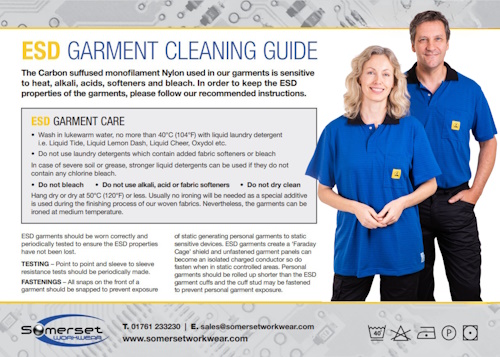
Your ESD garment will go through multiple washing cycles during the garment life and the importance of how it is washed cannot be stressed enough. The carbon monofilament can be affected by heat, chemicals, and high heat or an incorrect cleaning liquid will have an impact on the life of the garment. The manufacturer may quote a garment life of 40, 50 or more industrial washes, but if the cleaning is not performed within certain parameters, the garment life will be reduced. We have seen examples of garments washed in excess of 70-80°C by commercial cleaning companies when an ESD fabric should be washed at 40°C. If you are using a commercial cleaning company, we do recommend that you check with them to see how they are cleaning and that they also have the capability to test the garments.
So how do you know if your garment is or is not compliant?
When a static control garment leaves the factory, it would have been manufactured with the material of a specific resistance. The standard sets this as being 1.0 x 10(11) ohms, but that should be considered the very upper limit for acceptance. Don’t forget that with wearing and even with correct washing, the fabric conductivity will change; having a new garment with a high resistance value will mean it will be non-compliant much quicker.So how do you know if your ESD garment is compliant and meets the ESD standards? Testing is the answer.
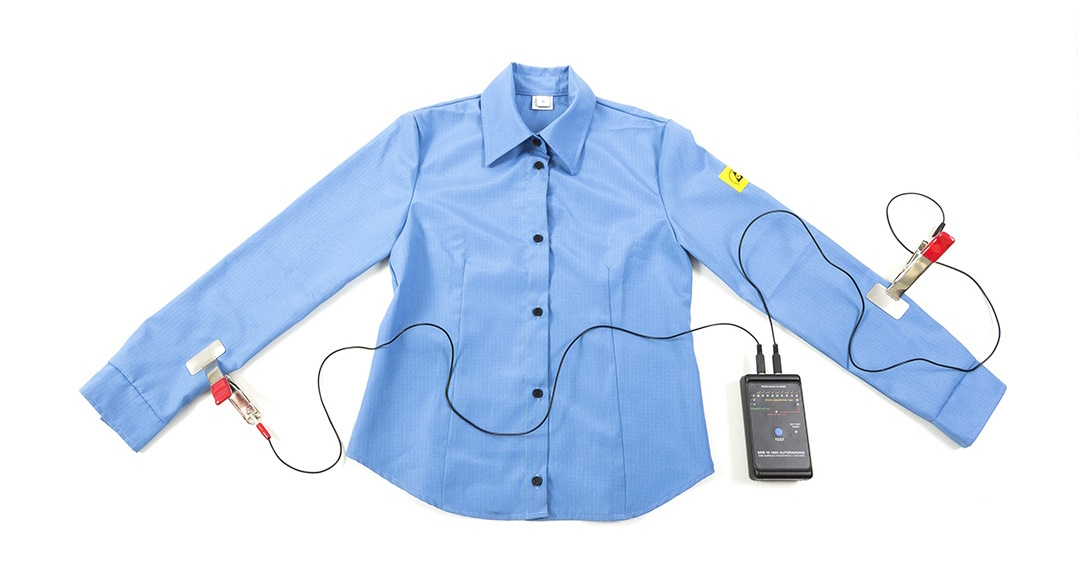
Sleeve to sleeve and point to point testingThese are two simple test methods to perform by taking a resistance measurement from cuff to cuff or panel to panel verifying the continuity through the arms to the body section and also checking the panel sewing. We supply ESD test kits specifically for these test procedures and incorporate a calibrated test meter (a calibration certificate is supplied), a set of clamps, leads, and an handy ESD storage box.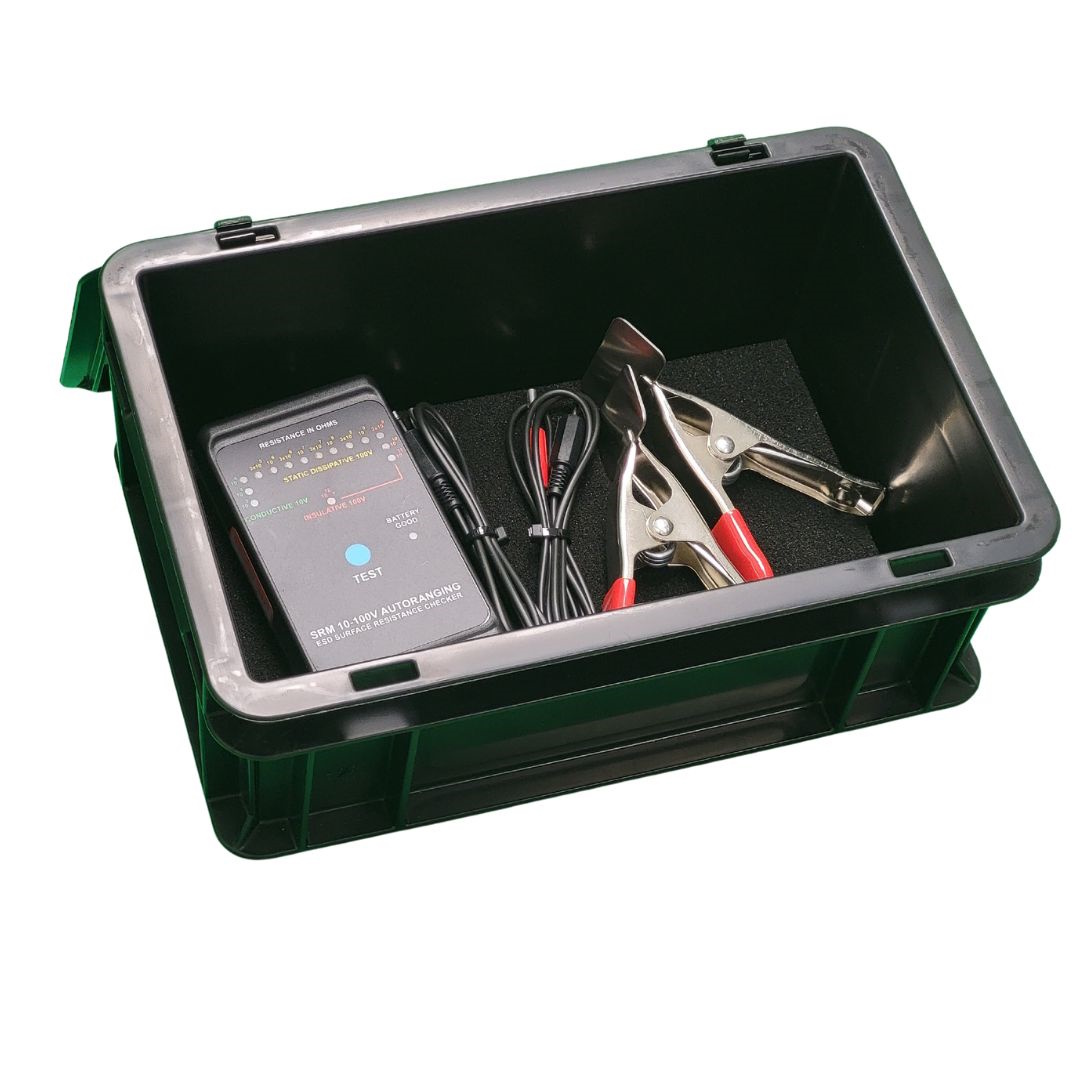
The procedure
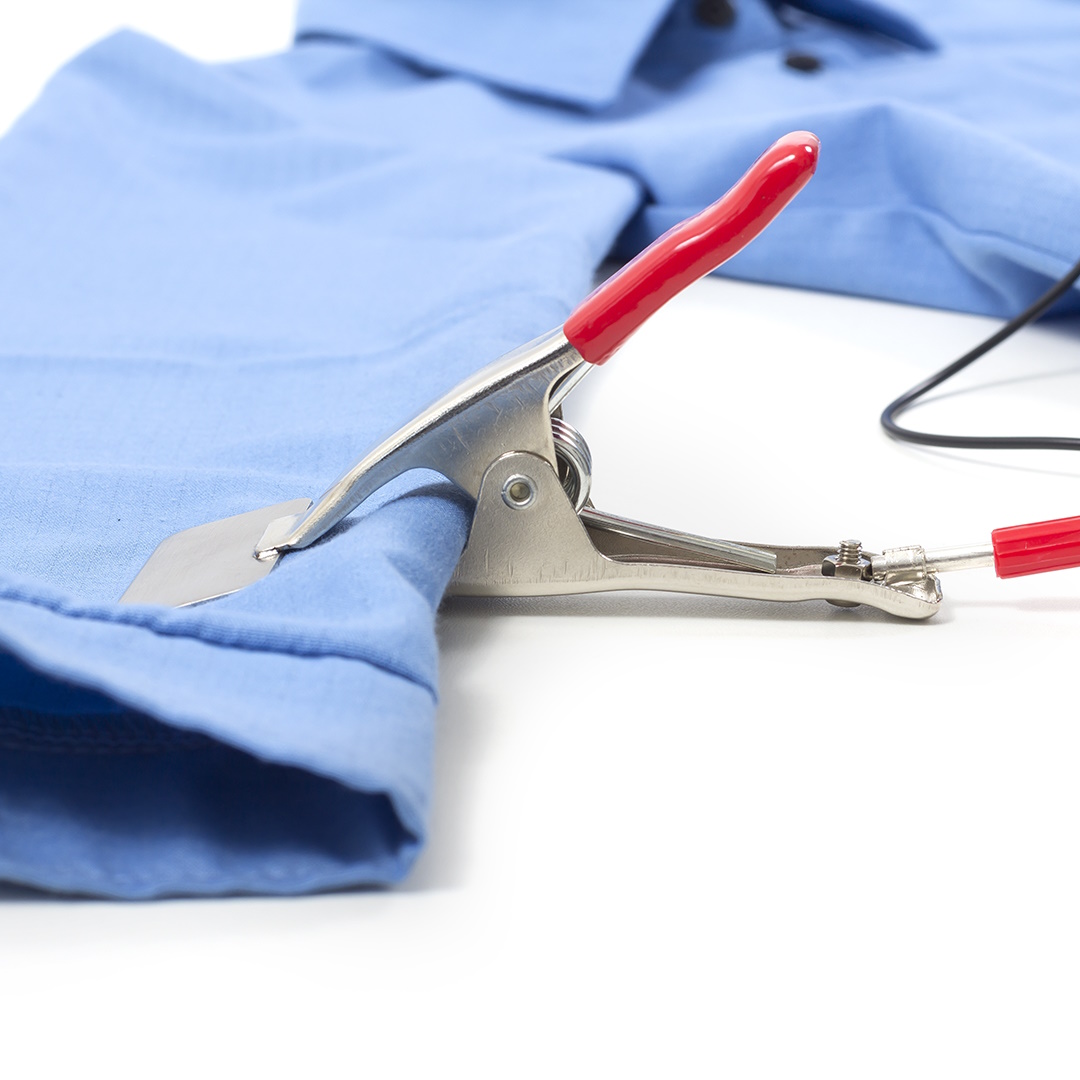
Firstly, ensure that the article of ESD clothing is not placed on an ESD static dissipative workbench or matting so that it is isolated from ground. With each clamp connected to the test meter, attach them to different parts of the garment, sleeve to sleeve or sleeve to body, and with the voltage applied a measurement can be recorded.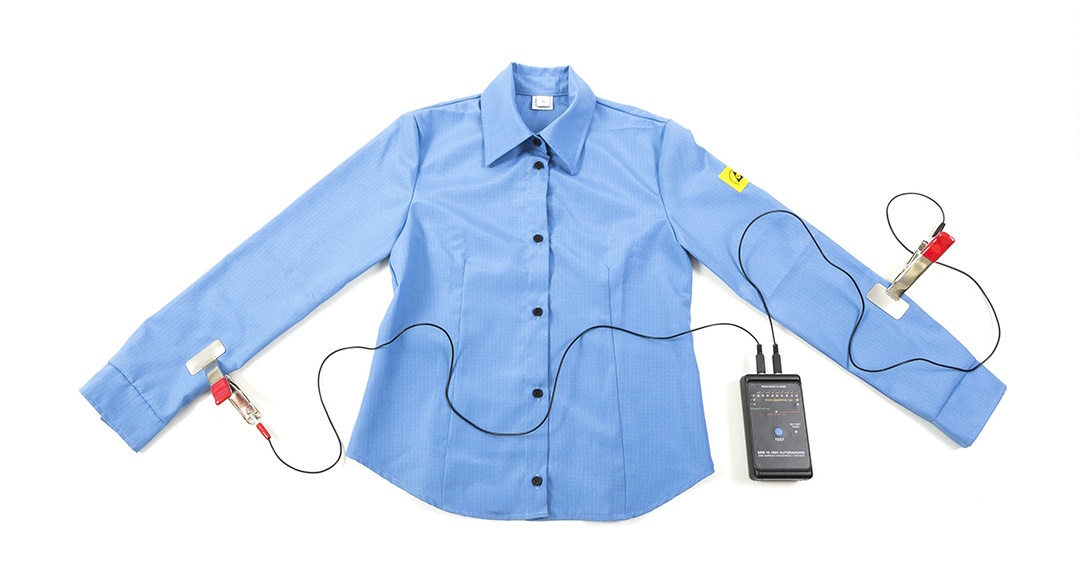
At Somerset Workwear we can supply a Certificate of Conformity stating the test procedure and results prior to sending your garment order to you. Please request this if it is a requirement.
Conclusion
Being an easy-to-perform test method means that having a planned periodic testing routine enables you to check the garments are compliant. We want you to get the maximum life from your ESD workwear and by performing these simple tests you can ensure you know the condition of the garment and that it is fit for purpose.
Buyer’s Guide to Waterproof Clothing
Published: 26th April, 2023
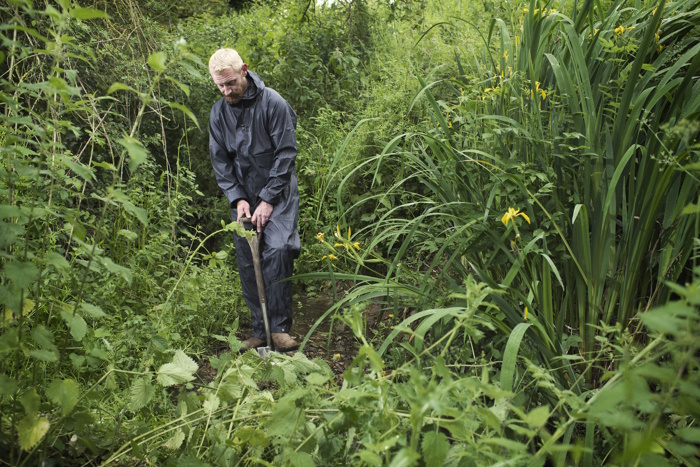
In this guide, we will look at how waterproof clothing is rated, the different ratings of waterproofness and the types of fabric used to make these garments. Waterproof describes material resistant to moisture and water getting through. Materials either have a membrane or coating on the surface that acts as a barrier keeping you comfortable and dry.
Choosing the right garment for the type of use is very important, to ensure that whatever the weather conditions may throw at you, you know you've chosen the right garment at the right time.
Waterproof Ratings Explained
2,000mm: This is the lowest rating for clothing to be called rainproof - resistant to light showers – for casual use.
3000mm to 5000mm: Typically, lightweight garments falling between this rating range are suitable for wearing in the rain for a short amount of time.
5000mm to 10,000mm: Ideal for work, garments that sit within this rating can be worn in moderate rain conditions and are usually made from heavier materials.
10,000mm to 15,000mm: Most waterproof jackets and trousers will be rated waterproof to 10,000mm, withstanding heavy downpours.
20,000mm and higher: This is the highest waterproof rating for going out in all conditions in heavy, prolonged rain.
Hydrostatic Head Test – How is Waterproofness Tested?
A hydrostatic head test is used to determine the waterproof rating of clothing. A minimum rating of 1,500mm is enough to be rated waterproof. To begin, a section of fabric is pulled tight under a tube and sealed. The tube is then slowly filled with water (in mm) and the fabric is monitored for 24 hours to see how much water the fabric can resist before penetrating through. An item of clothing with a waterproof (hydrostatic head) rating of 2,000mm can resist 2,000mm of rainfall in a day before water starts seeping in. The higher the rating, the more waterproof the garment.
Waterproof Fabrics
There are a few fabrics that make great waterproof options for clothing:
- Polyester and Nylon – these synthetic fabrics are water-resistant due to having a tight weave.
- Polyurethane – the best waterproof material as it is breathable, and oil and crease-resistant. It is also a soft flexible fabric that gives room for movement.
- Rip Stop – this is a tear-resistant fabric that is nylon threaded but not completely waterproof as prolonged exposure to water means it will eventually penetrate through. It is also not breathable or stretchy.
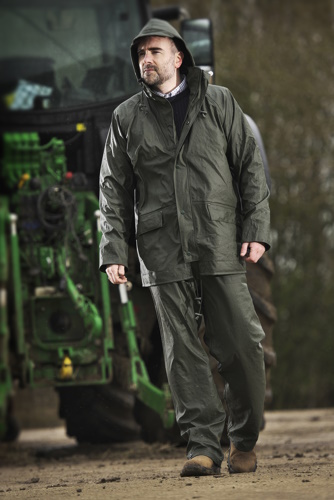
What is the Difference Between Taped and Welded Seams?
Taped seams increase protection from the rain on waterproof clothing. When a garment is sewn, stitching needles leave tiny holes allowing water to seep through. To prevent this, a machine melts thermoplastic tape over the seams to seal them. Fully taped seams mean every seam on the fabric has been sealed making it extremely weatherproof, whereas critically taped seams only have the exposed areas sealed such as the neck, shoulder, and chest.
Welded seams offer maximum waterproofness as there are no needle holes due to the two pieces of fabric being fused together using heat and pressure. This creates one seamless surface stopping water and chemicals from penetrating the garment. The problem with welded seams is that it prevents air flow, so the fabric needs to be breathable to avoid the wearer excessively sweating.
Fabric Breathability
Breathable fabrics allow heat and sweat (in the form of water vapour) to escape through the material quickly, preventing condensation build-up inside the garment. Breathable clothing keeps you dry while working and being physically active. The Moisture Vapour Permeability (MVP) rating measures the speed at which water vapour can escape per square metre (m2) of fabric in 24 hours. The higher the MVP rating, the better the fabric is for breathability. Frequently, you will see a waterproof rating alongside a breathability rating on clothing.
Currently, there are three different tests for measuring the breathability of the fabric. These are the Upright Cup test, the Inverted Cup test, and the Sweating Hot Plate test. An MVP rating of more than 8,000gm2 is considered good for general outdoor use, and an MVP rating of 20,000gm2 is best for more physical activity or work. An MVP rating of 30,000gm2 or more is great for prolonged activities like sports such as skiing.
The Upright Cup test – a piece of fabric is attached over the top of an upright cup to fully cover and seal it. It is then monitored for 24 hours to see how much water vapour passes through the fabric into the cup. The weight of the cup is then checked to see the amount of moisture released by the fabric, giving the breathability rating.
The Inverted Cup test – fabric is put on top of a waterproof membrane and used to cover a cup which is then inverted and placed into a pan of water. After 24 hours, the weight of the cup is measured to see how much moisture has been collected in it.
The Sweating Hot Plate test – this test differs from the upright and inverted cup tests where evaporative resistance of fabrics and moisture loss is measured when heat is applied. This creates controlled conditions like someone producing heat during strenuous physical activity. A heated metal laboratory plate produces temperatures to cause sweating. The clothing being tested is then added to the plate with water to replicate moisture. The plate is kept at a constant temperature and measured to find out how much energy is used to keep it cool. Normally in real life, this would happen when the vapour is released to the outer layers of the garment keeping the body cool. The amount of energy used to do this is shown as the resistance of evaporation of a textile (RET).
Construction of Waterproof Garments
Waterproof garments are made up of two or three layers: an outer layer (‘face fabric’), a membrane layer, and a tri-coat mesh (inner) layer.
- The outer layer – the first layer for water resistance is treated with a DWR (durable water repellency) coating and made from either polyester or nylon fabric. DWR causes water to bead up and roll off the surface instead of being absorbed. This layer and the membrane make up the 2-layer fabric construction and will have a loose liner to protect the membrane. It also dries quicker.
- The membrane – the membrane layer is made from Teflon also known as ePTFE (expanded Polytetrafluoroethylene) and thinly coated with PU (Polyurethane) on the inside of the outer layer. This makes the membrane oil-resistant, but breathable as tiny holes allow water vapour out whilst preventing water from getting in.
- The inner layer – this is made up of a 2-layer construction (outer layer and membrane) and is attached to a lightweight mesh layer.
These layers make up a 3-layer waterproof garment – the most advanced construction offering maximum protection whilst remaining durable, flexible, and breathable. Over time, oil, dirt, and abrasion can break down the DWR treatment, which is why it is important to either replace your waterproof clothing or reapply the coating.
Waterproof coats and trousers are essential pieces of workwear or outdoor pursuits to provide protection from the wettest conditions. Shop our collection of Waterproof Coats and Jackets and matching Waterproof Trousers.
The Ultimate Guide to Scrubs Uniform
Published: 12th April, 2023

Scrubs are a universal uniform for anyone working in the healthcare industry that may encounter fluids and infections and is used in a sterile (scrubbed) environment. To protect employees, scrubs were designed to be easy to wash in a high-temperature setting and easy to wear, preventing the spread of infection and reducing the risk of contamination.
Scrubs have only been popular in the UK in the last twenty years. Before that, tunics were commonly worn, traditionally by nurses. Now they are seen being worn by staff in hospitals, clinics, and spas.

Choosing Your Scrubs
When deciding what type of scrubs workwear to buy from us here at Somerset Workwear, we suggest considering the fit, style, material, and customisation options.
FIT – Medical scrubs can be stylish as well as practical for healthcare professionals. There are many options for a relaxed, loose fit or a more tailored fit for a fashionable look. It is important to choose the right fit so that you have flexibility of movement and are comfortable, otherwise, a tight fit will be too restrictive. This is especially when you need a full range of movement to help lift patients out of bed, reach for linen at a height, or when bending down. We supply men's and women's scrub sets, tops, and bottoms separately for the perfect fit.
STYLE - Many of our scrubs are functional such as our joggers which feature an ankle cuff and elasticated waistband with an adjustable drawcord for comfort. Our scrubs tops are designed with a V-neck collar so that the material does not touch your face when taking it off, preventing the spread of infection. The scrubs tops also come with or without a breast pocket for easy storage for pens, post-it notes, alcohol wipes, and many more items. Our scrubs trousers have an elasticated waistband and pockets plus one side pocket. Some of our scrubs sets consist of contrasting coloured fabrics, side vents, and panels creating more space and movement.
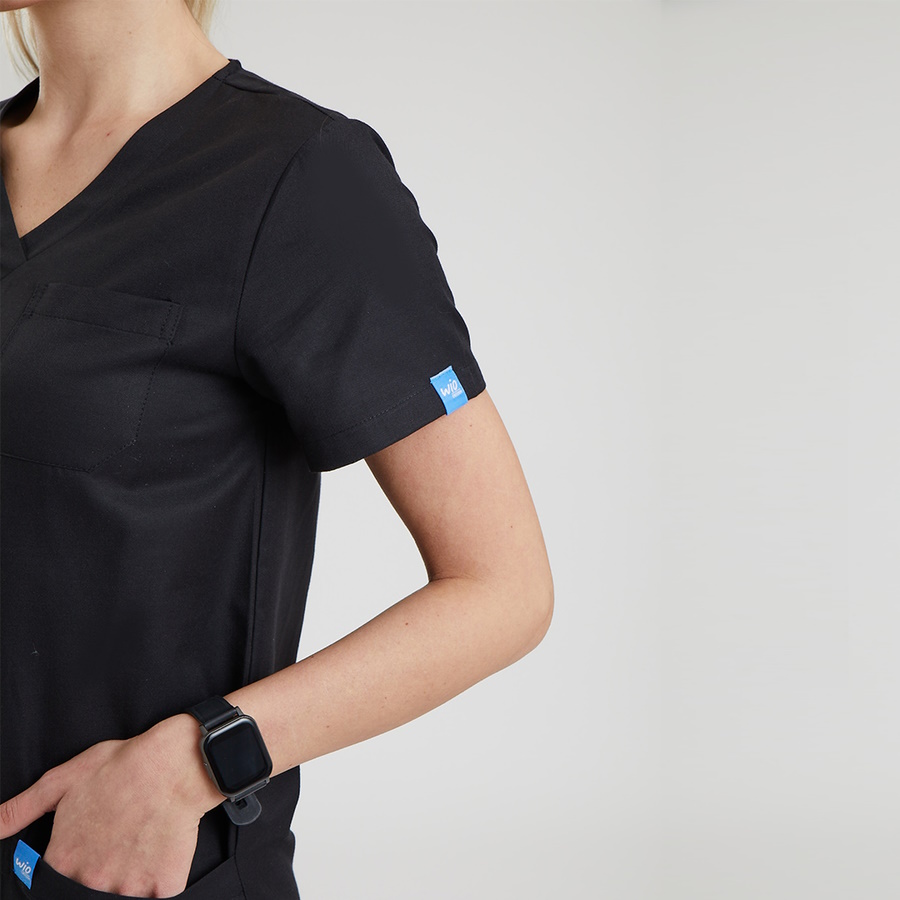
MATERIAL - Suitable for long shifts, our scrubs are manufactured to OKEO-TEK Standard 100 for safety and comfort. The stretchy fabric is lightweight and antiperspirant, minimising odours and making it breathable, durable, and anti-wrinkle. All our garments are machine washable at 40°C (maximum 60°C) and easy to iron. Our basic scrubs range is made from cotton and polyester, whilst our dynamic jogger scrubs collection is manufactured from a polyester, rayon, and lycra blend.
CUSTOMISATION – At Somerset Workwear, we can personalise your scrubs using our in-house embroidery service with your business name, staff name, job title, or logo design. Contact us to find out more about branding your workwear.
Who Can Wear Scrubs?
Anyone working in the healthcare sector, including doctors, nurses, vets, dentists, care workers, midwives, opticians, chiropractors, and physiotherapists. Beauticians, sports therapists and even acupuncturists can also wear scrubs for comfort and protection against spreading infection. We work with trusted and experienced manufacturers to ensure our scrubs are high-quality and long-lasting with a broad range of colours and sizes and personalisation. Orders over £75 are FREE delivery (UK mainland only). Browse our scrubs range for the latest styles.
ARTICLE DATE: 29th June 2022
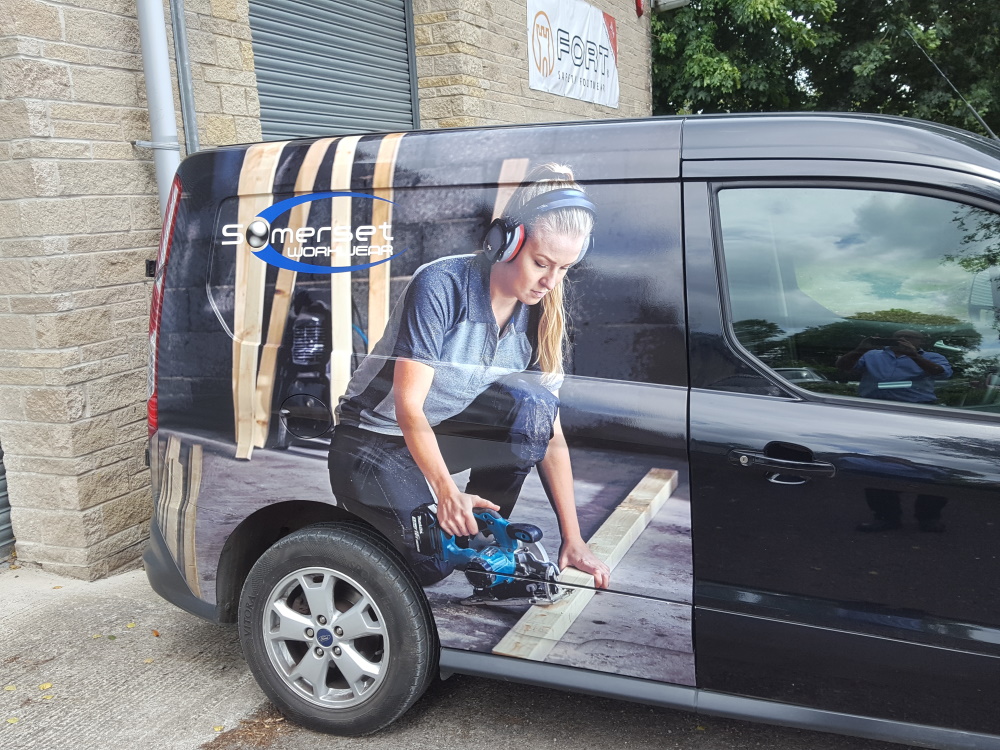
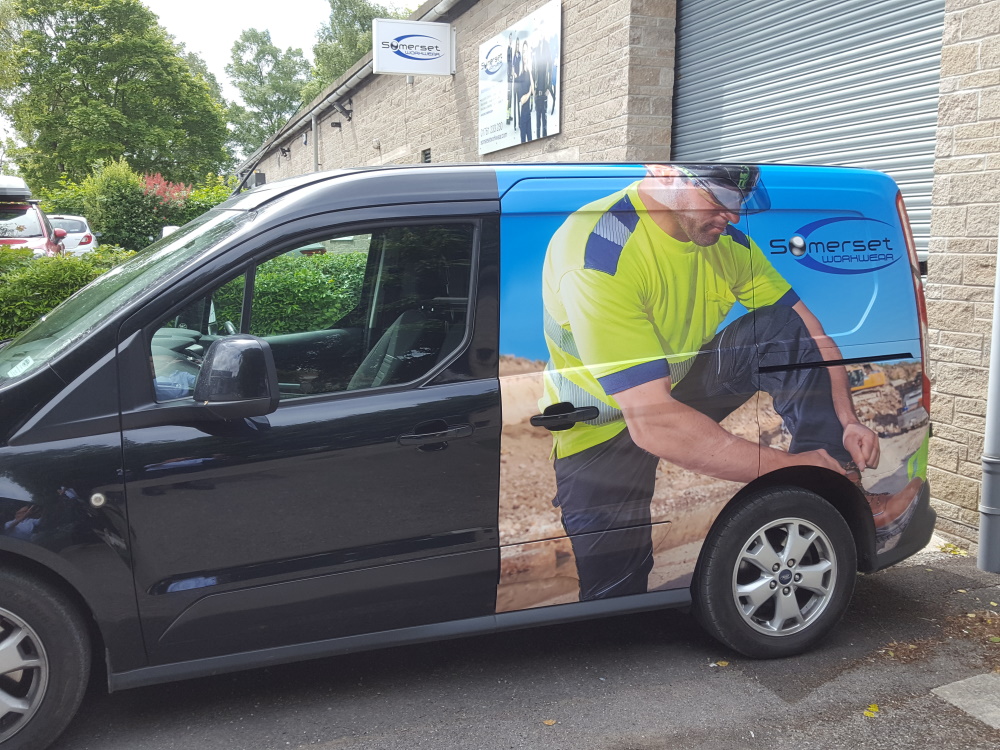
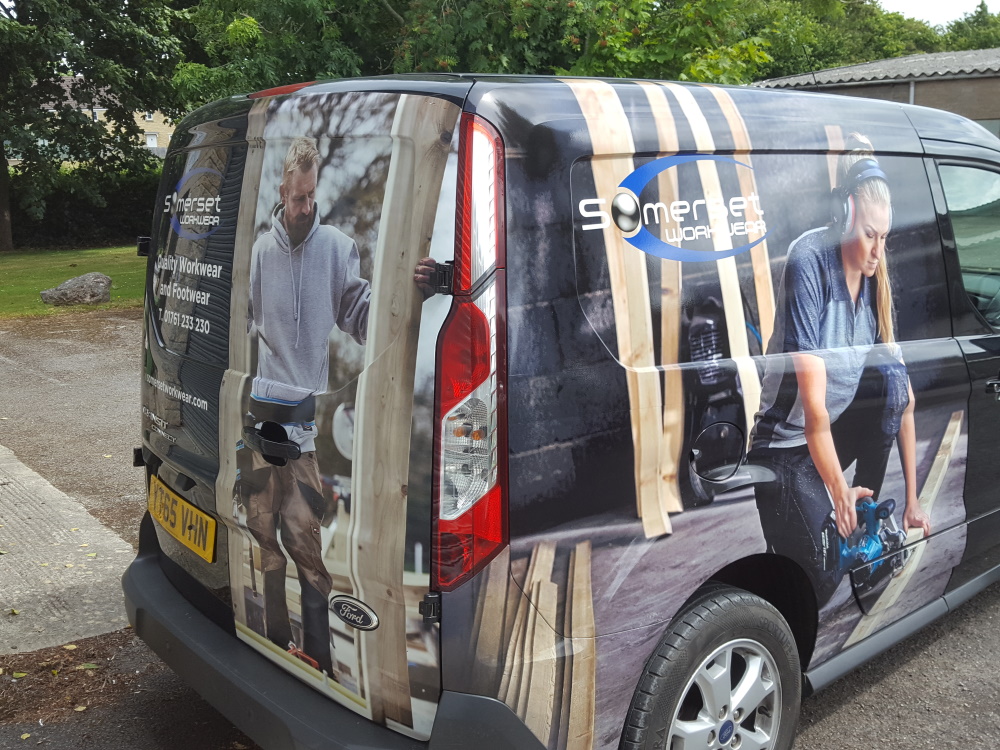
We have finally got around to having our delivery van vinyl wrapped with some amazing graphics. These graphics represent some of the great brands we work with; Portwest, Fristads, and Castle.
Look out for our van around the Somerset towns and find us on the Westfield Industrial Estate, Westfield, Radstock. Our trade counter is open from 8 am until 5 pm so pop in and see us.
ARTICLE DATE: 18th June 2021
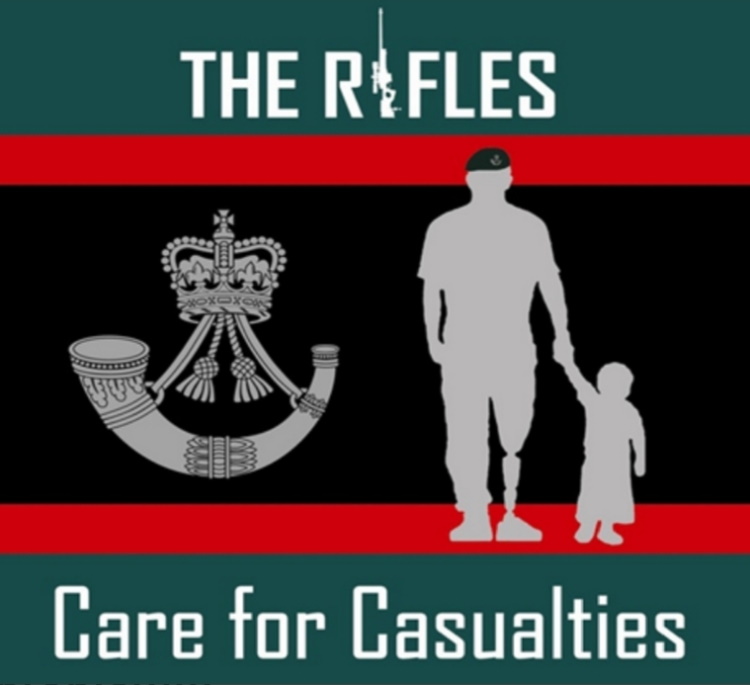
For this first article, we wanted to promote a truly worthy cause 'Care for Casualties. You will find below a statement from Paul Thorner a Light Infantry Veteran and the veteran's fundraising challenge.
Dear Sir & Madam
My name is Paul Thorner and I am a Light Infantry Veteran. On the 17th of September 2021, I will be joining over 100 veterans and military service personnel, in taking part in a march along the Jurassic Coast, from Lulworth Cove to Lyme Regis to help raise funds and awareness for The Rifles Regiment – Care for Casualties and PTSD. Every year, we lose Brothers & Sisters who return from conflict, that struggle with their injuries and demons, and suffer from the dreaded PTSD that ends in them taking their life!
When you ask a veteran when they were last there, in many cases the answer would be “every night". The military train you to go to war, but no one trains you to come home!
I write to ask if you would be interested in supporting this great cause as a company. For a minimum sponsor of £50.00 we will carry a treasure chest, with the name of your company written on it along the Jurassic coastline. We will also have sponsor banners, that will advertise your company name on our military vehicles, that will be accompanying us along the route and at all our group photoshoots.
If you would like to sponsor this great cause. Please pledge a minimum of £50.00 to my just giving page link below, leaving your company name and I will ensure it is added to our list of sponsors.
A link to Paul's Care for Casualties site
I understand that times have been difficult for many companies this year and would like to take this opportunity in thanking you for your kind support. Your pledge will make a big difference for those that gave their all.
Many Thanks
Paul Thorner
Paul, we wish you all the very best for the march this September. From all at Somerset Solders and Somerset Workwear.
ARTICLE DATE: 26th May 2021
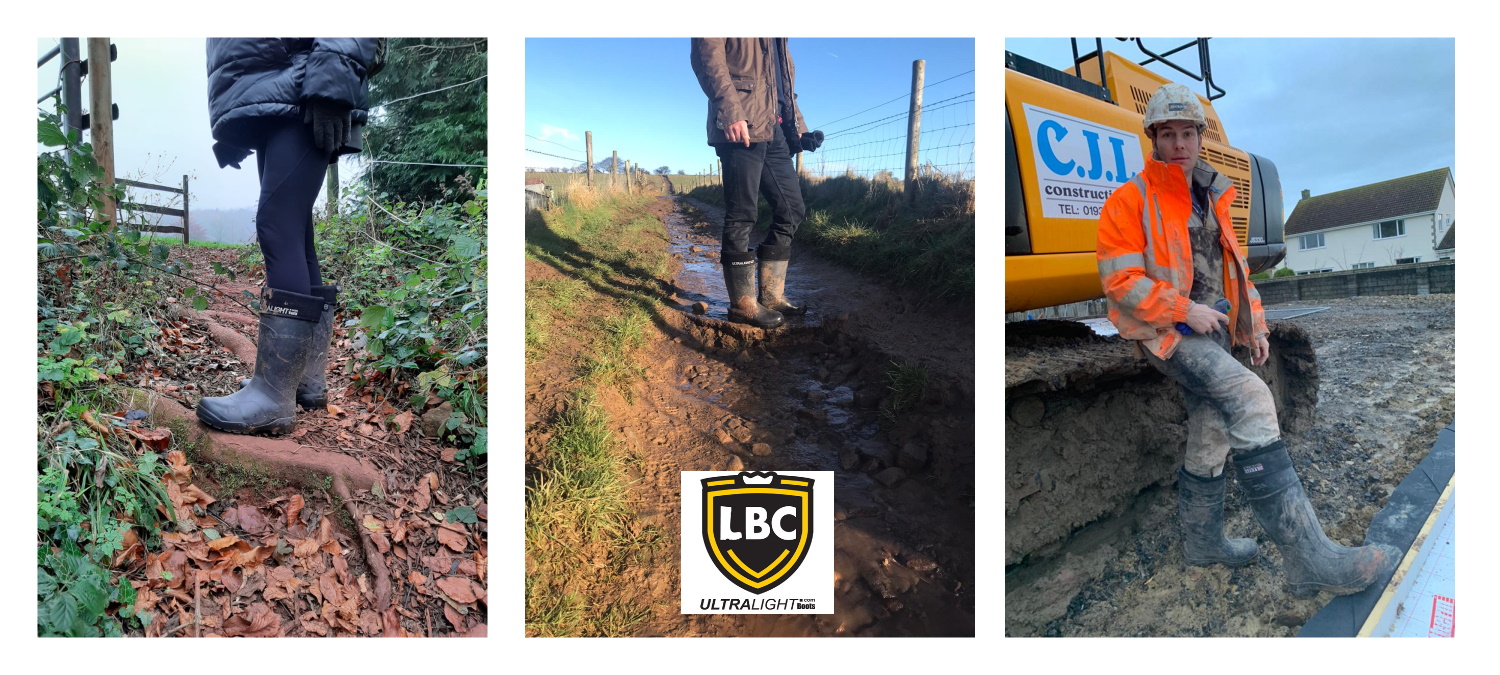
Somerset Workwear has teamed up with The Leon Boots Company and is now stocking the amazing Ultralight Wellington Boots, both in Safety and standard styles. Ok it's nearing the end of May and we would welcome some lovely warm weather, but we British know our weather all too well! The LBC Ultralight boots are exceptional wellingtons being lighter than any wellies available by up to 65%. They come with a removable and washable warm liner which gives the wellington's all-year-round appeal. They are produced from a direct injection molding process without any gluing or vulcanizing process which makes them resistant to cracks and splits.
So whether you are looking for wellington boots for that country walk, for working on the land, or for that building site then the LBC Wellington boot will do the job.
https://www.somersetworkwear.com/footwear/wellington-boots
ARTICLE DATE: 27th March 2021
Continuing developments at Somerset Workwear are making 2021 an exciting year for Mark and Caira Day. As well as adding to their workwear product range, Mark and Caira have invested further in the embroidery capability and garment personalization, including heat-transfer vinyl printing especially for hi-vis workwear embellishing. Somerset Workwear has also recruited local people who have many years of experience gained from working with a major brand of workwear.
ARTICLE DATE: 28th February 2021
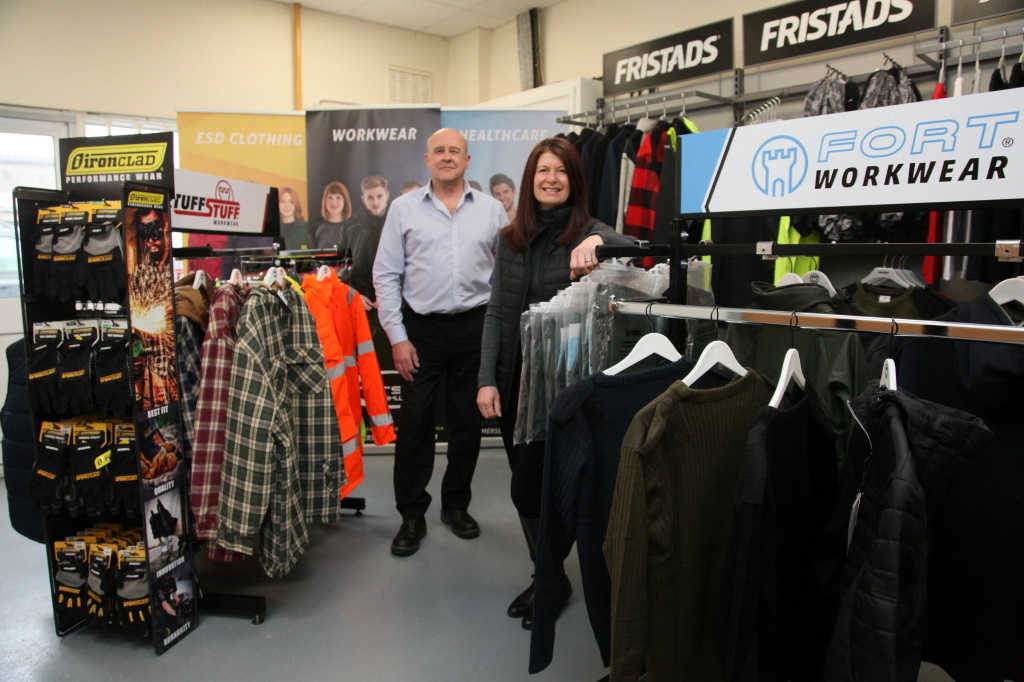
TuffStuff and Fort Workwear are now available. New to 2021 comes a great range of occupational TuffStuff and Fort Workwear clothing. Quality and excellent pricing go hand in hand with these industrial workwear brands. Coveralls, joggers, fleeces, and hoodies, along with hi-vis coats and jackets, Somerset Workwear, Westfield, Radstock, can provide the workwear you need. For work trousers check out the 725 X-motion trouser, designed for tough jobs and lasting durability. With practical pockets that will come in handy while working on-site. https://www.somersetworkwear.com/tuffstuff-725-x-motion-grey-work-trousers#